Monday, 30 September 2019

Get the Rhythm

Get the rhythm, get the rhythm, there you go, get the rhythm.  It is the rhythm that drives you on the Camino!

It is the rhythm of how to pack your bag in the pitch dark, in a shared Albergue, where 20 other souls are sleeping.  It is knowing your clothes by the sense of touch - it is the rhythm, get the rhythm, there you go!

It is the rhythm as your feet and hiking poles tap out the sequence that your body falls into pace with. It is the rhythm that drives you forward up to the peak of O'Cebreiro one foot after the other, the gasping of breath and the cascade of sweat. It is the swagger of the walk as the mist engulfs you; it is the rhythm, get the rhythm, there you go!

It is the rhythm of cutting the wax,  the swivel  of the cork- screw, the swill of the glass as the wine flows and the chorus of clinking. Stories are embellished and laughter roars.  That's it, get the rhythm, there you go! Get the rhythm.

It's the sense of community; Buen Camino, the 5 minute friendships that seem to last a life time. Raising your glass to salud the glory of the day; it is knowing that this is a life stripped bare- walk, eat sleep, repeat.  Get the rhythm, there you go, get the Camino rhythm!


Wednesday, 25 September 2019

Camino calling!

The Camino call is a strong one. It niggles, gnaws and itches its way under your skin until you agree to succumb!

This call sees us sleep deprived from flights, transit lounges, express  & regional trains, to finally dump us in Ponfeddara.  With a backpack, hiking poles, good boots and an enlightened outlook, we embrace our way!

Our first experience saw us meticulously plan times and distances.  We got swept away with mileage  covered, the number of non-stop walking days and we scoffed at those softies;  who didn't carry their own bag and took taxis, buses or trains. It became a competition of one-upmanship.  We were Camino snobs!  It was only through experiencing an injury and meeting some Camino legends at Shogun, that the major shift in our mindset occurred.  We discovered that, there are no rules, that the Camino is individual; the journey is yours and yours alone!

It is with this philosophy, that we pilgrim this time round.  We walk as far or as little as we want.  There is no plan - we stop at local cafes, yarn, partake in wine tasting and tapas, we  smile, laugh and soak up the atmosphere of being part of the Camino community.  We stroll through vineyards, stay in cosy albergues and beam with the simplicity of it all; a life stripped bare.

Thank you, Camino for calling us back!


Saturday, 21 September 2019

Call of the wilds!

In 2017, we set off on an adventure! To step away from the baggage of society and live the simple life. The Way of Saint James, The Camino de Santiago or Pilgrimage of Compostela! With backpacks  containing the barest essentials, we joined the masses, following the ancient path to the resting place of St James.

 Trekking the undulating hills through the rustic villages and towns,  using the simple yellow arrow or shell to guide the way;  A pilgrim's life brings forth a roller coaster of emotions; the anticipation, exhilaration and liberation but also brings; fatigue, aches and pains brought on by the strenuous nature of the challenge.

The first part of this adventure is the physical, the body needs to adjust to the new demands placed upon it, you may develop blisters, sore feet and aches where you never thought possible. ibuprofen and compeed become your new best friends. Just when you start to get the pain under control, you move on to the mental game. By this stage you have walked many kilometres and have many more ahead, just keep one foot in front of the other. The epiphany or spiritual stage kicks in when you realise just what you are achieving and how far you have come. Deliverance!

At dinner on our last night in Santiago, the question went around the table about walking the Camino again? At the time, we felt that we had 'been there done that' and we had other fish to fry.  Never say never!

 We yearn for the simplicity of  'The Way' and are on our way back there now!


How ever you choose to accomplish your Camino, remember, it is just that! Your Camino is your way!

Sunday, 19 May 2019

In the world kitchen! A wee tipple Sri Lankan style!


Image result for sri lanka flag


Although the Ceylon Lion seems to be a emblem of Sri Lanka, it has been extinct since 37,000 Bc.

This 'King of the Savannah' symbolises visionary leadership and power; and not only dominates the Sri Lankan flag and lends its name to Sigiriya, the ancient rock fortress near Dambulla but is also the trademark for Sri Lankan lager.

Lion lager

With 4.8% alcohol volume this lager is credited as a great thirst quencher. Golden malt in colour, it is sweet with a hint of fruit flavour. The black and gold label shows a strong and watchful golden lion.
A nice drop!

                                     Image result for lion beer


Ceylon Arrrack

Arrack is a traditional Sri Lankan spirit distilled from the sap of the coconut flower and aged in oak casks. This golden coloured toddy tastes like something between whisky and rum, and is most definitely an acquired taste. However, used as a cocktail base, arrack can be quite sensuous.


Image result for arrack


Coconut water.

Time for a little hydration after giving your liver a workout! Coconut water, Sri Lankan super food is known to refresh and pep you up in a tropical climate. Best taken fresh from the source!


Ceylon tea

This aromatic, refreshing tea not only tastes great but is considered one of the best teas world wide. It boasts many health benefits; promotes cardiovascular health, aides immunity and provides energy just to name a few.

Image may contain: one or more people, plant, grass, outdoor and nature


Image may contain: coffee cup and drink


                Saudiyapuramu!                       


Friday, 10 May 2019

Sri Lanka: Jaffna and Trincomalee!

Jaffna.


The humidity’s ethereal fingers encompassed us as we await on Anuradhapura station to travel north to Jaffna.  It is in Jaffna, that the Liberation Tigers Tamil Eelan (LTTE) embarked on a 30-year violent struggle with the Sri Lankan military for the establishment of a separate homeland in the North.  Over 75,000 people died during the conflict and over 1,000,000 land mines still lace the ground.  Our journey North took around four hours on the local train, and as we watched out the window, the toll of the war was still apparent.  Abandoned homes, derelict farms and destroyed infrastructure litter the landscape, we later learnt that 16 of the 19 military battalions are still stationed in the North and that people are slowly returning to their homeland.

Our ferry, to Nainativu Island, the Northern most point in Sri Lanka, was simply a converted wooden fishing boat, (aka people smuggler limousine). As our boat neared the Island, we were greeted with the first glimpse of Nainativu Nagapooshani Amman Temple.  This ancient and historic Hindu temple is dedicated to Parvati and is a significant symbol for the Tamil people. It houses four gopurams (gateway towers) ranging from 20–25 feet in height, to a soaring at 108 feet.

Image may contain: 1 person        Image may contain: people standing, sky and outdoor         

Jaffna also houses the famous Dutch Fort which is a legacy of the country’s colonial past and maritime heritage. The Portuguese built the fort in 1618 and was re-built by Dutch colonisers who took over the Fort in 1680.  The Fort is all but ruins but provides a spectacular viewpoint from the rampart to watch the sunset over the Indian Ocean.

Image may contain: outdoor        Image may contain: outdoor and nature        Image may contain: outdoor and water

Back on the mainland we visited a local family for a cooking demonstration followed by a delightful dinner of traditional cuisine.


Local bus on to Trincomalee.

An hour on this bus was quite sufficient to get the drift of public transport in Sri Lanka. The aircon consisted of open windows to allow the local transport fumes to congest our lungs as the Sri Lankan 'top of the pops' blared at full volume. We stopped at the various stations, more people boarded and eventually it was standing room only. The ticket master made his way through the crowd after every stop to ensure all had paid their way. A tad worried when the time to disembark but although it looked quite chaotic, all went smooth and we made it in one piece.

Image may contain: sky and outdoor                                                    

Trincomalee is a port city on the northeast coast of Sri Lanka. A popular holiday destination for both tourist and local alike. We had some free time here with sea side options available. We choose snorkling and a lovely couple of hours were spent out on the reef. The underwater garden was lovely although bias as we are; not as gorgeous as our own Barrier reef. Our free afternoon was spent wallowing in the sea without a stinger in sight, bliss!

 Image may contain: one or more people, sky, outdoor and nature


Friday, 3 May 2019

In the world kitchen! Sri Lanka!

 The pearl of the Indian Ocean, Sri Lanka!
Making liberal use of local fruit, seafood and an arsenal of spices, Sri Lankan cuisine delivers much more than just curry and rice. 
Here are some temptations not to be missed:

Appam 
A type of pancake made with fermented rice batter and coconut milk. A ladle of batter is fried in a small wok and swirled around to create a small bowl. You can top these little delights with a variety of concoctions; sweet or savoury! Try the traditional banana with grated coconut and palm sugar or for the more daring; coconut chutney, shallots and chilli. Eat for Breakfast, lunch or dinner, no set rules, just use your imagination!
                                        

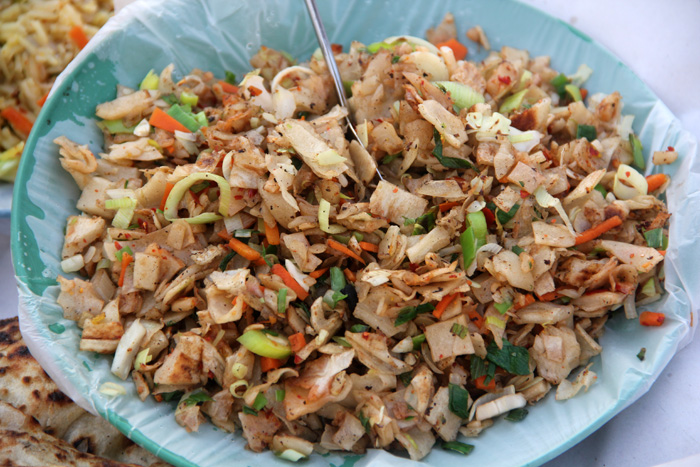
Kottu
This simple but tasty dish uses godamba roti as its core. A combination of vegetables & fragrant spices are stir fried until almost tender, add in a beaten egg then the shredded roti for a couple of minutes before serving. Yet again, a versatile dish; vegetarian or add meat or seafood. Delicious!
Vegetable Kottu - Sri Lanka

Fried salted fish
 Our guide Yasi took us for culinary experience in a village; here the local women cooked up the most divine banquet. A delectable array of curries and other traditional tit bits were served but the piece de resistance was the salted, fried fish!
Image may contain: food

Image may contain: 1 person, smiling, sitting, food and indoor

Image may contain: food

No photo description available.

Godaak rasai bohoma sthuthi!


Friday, 26 April 2019

Sri Lanka: Negombo & Anuradhapura!

 First stop, Negombo.

A lovely little seaside town to start our sojourn. We were accommodated in the Rani beach resort, strolled along the beach, enjoyed cocktails by the pool and just relaxed before the tour began. Dinner was on the beach with the promise of a fire show. Yipee! Much to our amusement, the fire show turned our to be nothing but a bon fire. Ha ha

Blood red was the sun as it cascaded across Negombo fish market, spot lighting  the creatures spewed from the depths of the ocean.  The ground turned crimson to match the awakening sun as fish innards splattered like a monsoonal storm and scales become adrift, falling like dandruff.  Crows feasted on the waste scattered by the cacophony of fisherman who bantered and shared tales of conquests, whilst dogs salivated and guarded this carnage. This market is a vegan’s worst nightmare.  The obnoxious odour burns into pores and penetrates the senses; the sounds of auctioneers screaming mixes with machetes cutting and gorging through flesh causing a tsunami of goosebumps.  A must-see incubus!

Tuk tuk negotiations took us to the esplanade where fisherman mending nets and boats await the call of the sea.  The dry fish market sweeps across the sun-baked foreshore. The men gut and scale the catch of the day whilst the women tend to the drying process, rotating, stacking and sorting of the mummified fish. 


Onward to Anuradhapura World Heritage site.

We donned our bicycle helmets (decided against the lycra accompaniment) and hit the bitumen in the sacred city of Anuradhapura.  This city froths around Buddha and the Bodhi sapling that was transported here in the 3rd century by Sanghamitta. 

We explored ancient ruins that spilt forth huge bell shaped Stupas, ponds and palaces. We felt the second of Buddha’s Noble Truths (we are born to suffer), as we walked on stoneware that resembles the hot coals of fire walkers. With piston liked legs, we pummelled our way towards Ruwanwelisay and Mirisawetiya Stupas, built like all good monuments to celebrate the blood shed of victory at war by King Dutugamunu between 140 – 160 BC and which hold relics associated with Buddha.

Our legs became torpid, as the sun began to bleed dry, we came to a halt in front of what was once the largest Stupa in the world at 122m high and the 3rd largest structure in the ancient world – Jetauanaramaya.  Entombed inside the Stupa is a sash once tied by Buddah).  Finally, we sat and watched the sunset dance across Thissa Wewa reservoir as local families wash and skylark in its water.   

 Bohoma sthuthi for this amazing start to our adventure.


                                     Image may contain: sky, ocean, outdoor, nature and water